

Galapagos Islands – evolutionary laboratory
November 18, 2025
Czech nature photo 2025
January 4, 2026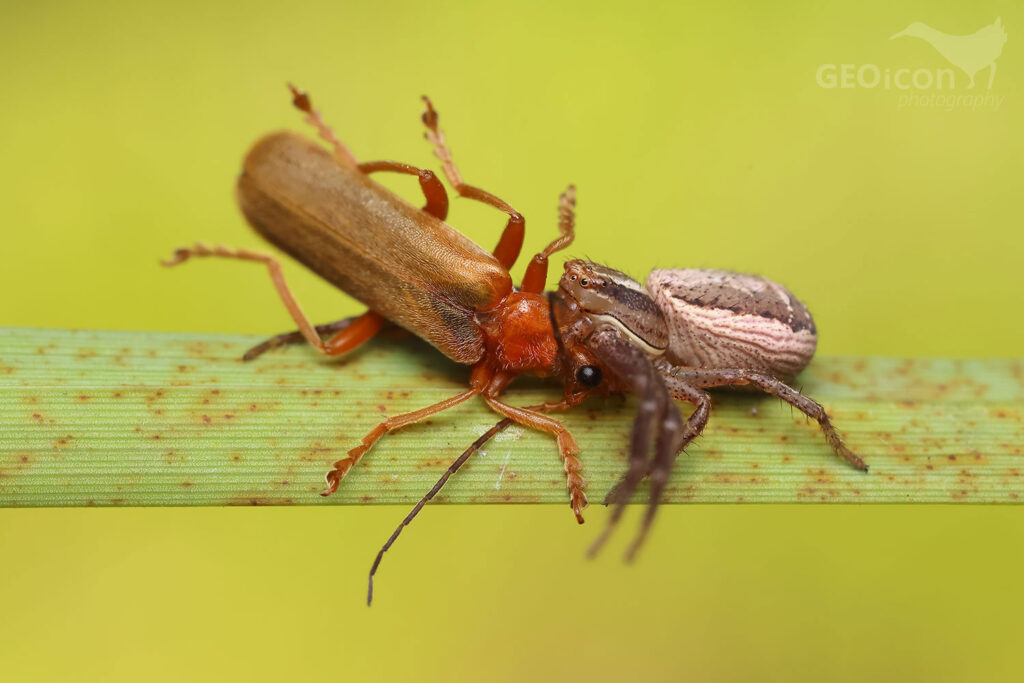
Spiders are said to bring luck. So a few of their photos could perhaps bring us all luck in the new year 2026. We will need it very much.
In addition to the above, they are very interesting animals (despite the objections of arachnophobes). Moreover, if they are having lunch or dinner, they are quite good at taking photos. In our latitudes, various types of other invertebrates are on their menu. Everyone probably knows that. However, when observing or photographing them in nature, I never cease to be surprised by how wide the range and especially the size of their prey is. Even an animal several times larger cannot be sure of itself against even the smallest eight-legged hunter.
The photographs show how diverse the spiders’ menu is.
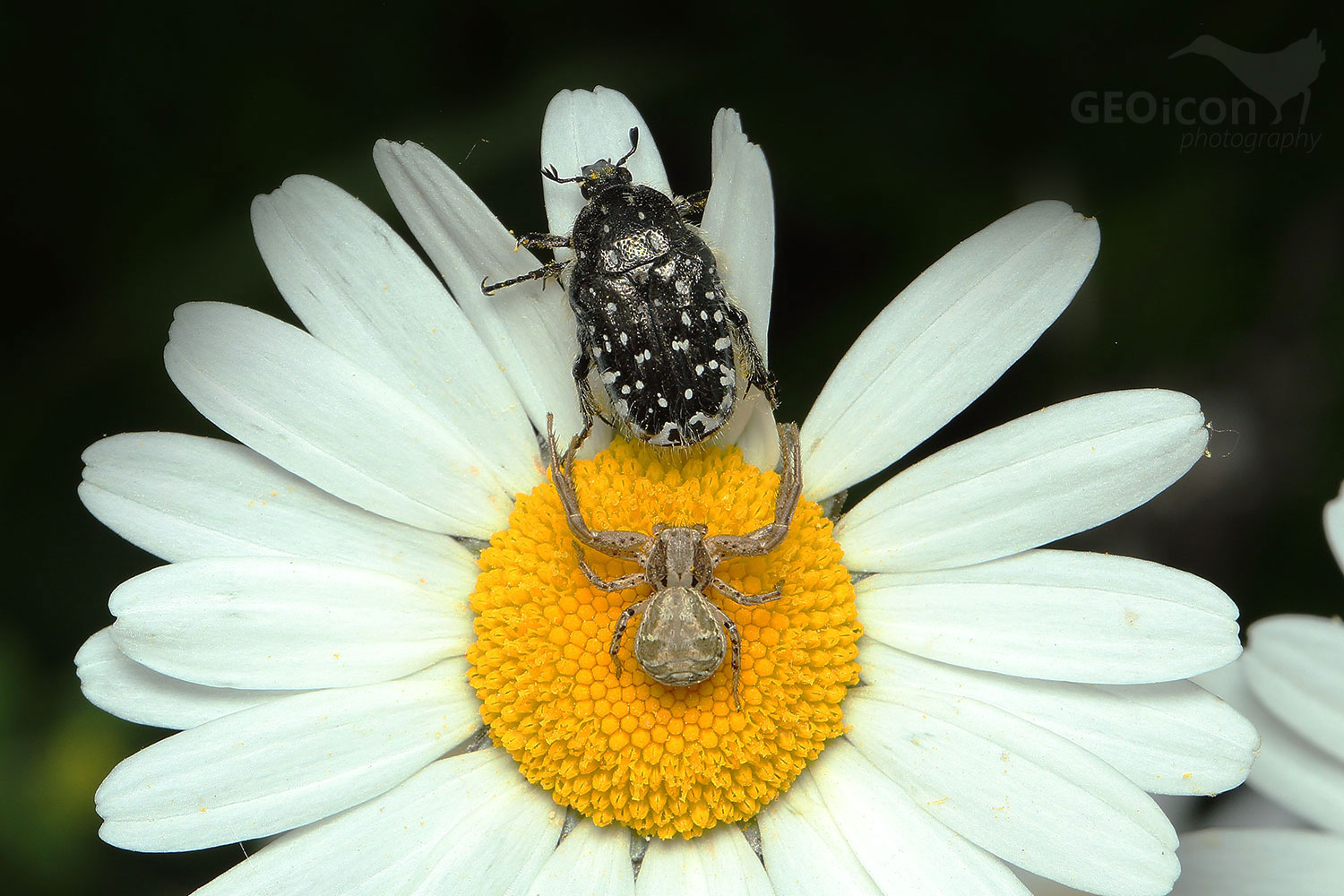
A crab spider (Xysticus) is about to catch a beetle White spotted rose beetle (Oxythyrea funesta).
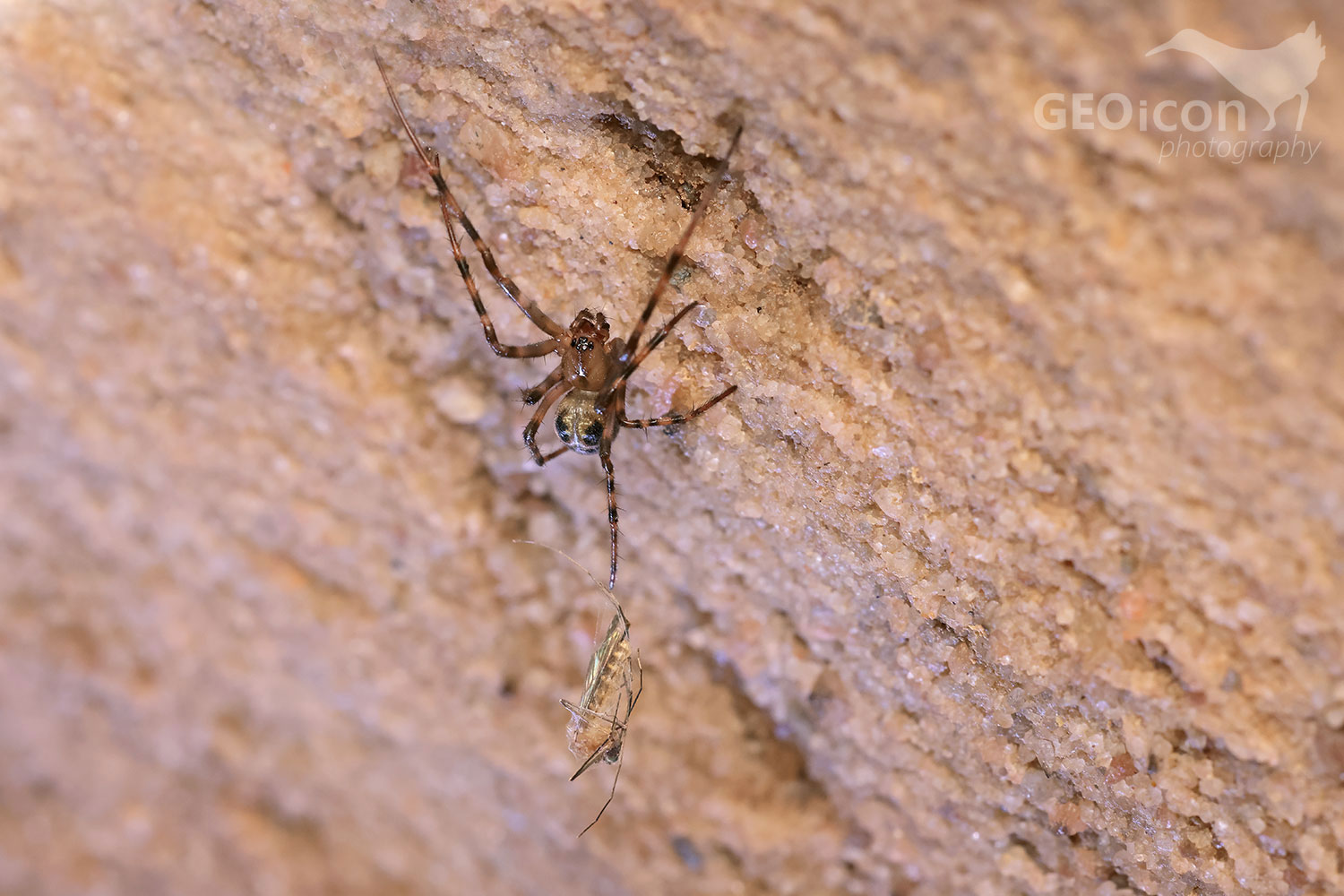
European cave spider (Meta menardi) on a cave wall with caught Common house mosquito (Culex).
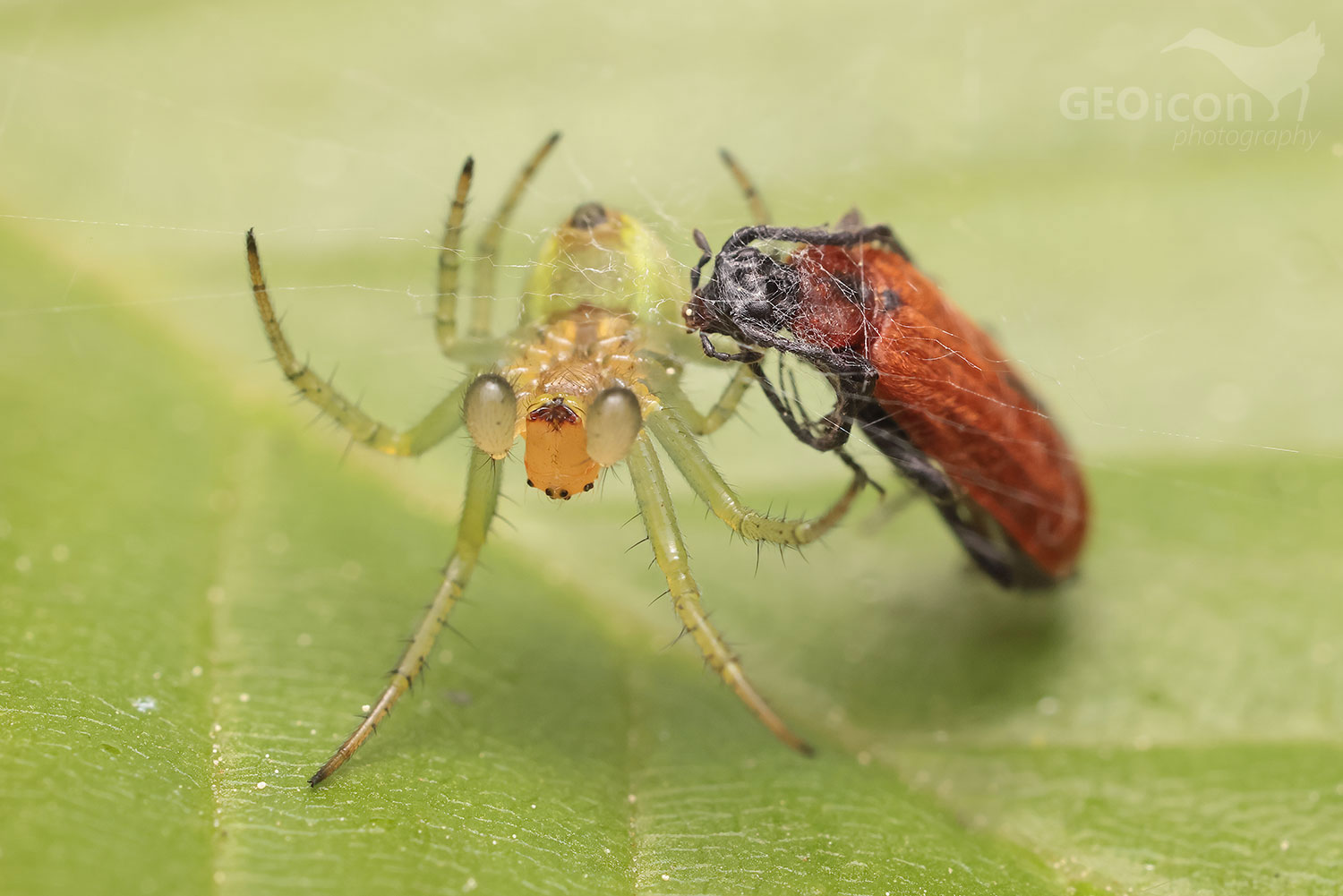
Cucumber green spider (Araniella cucurbitina/opisthographa) with caught and wrapped Cardinal beetle (Pyrochroa).
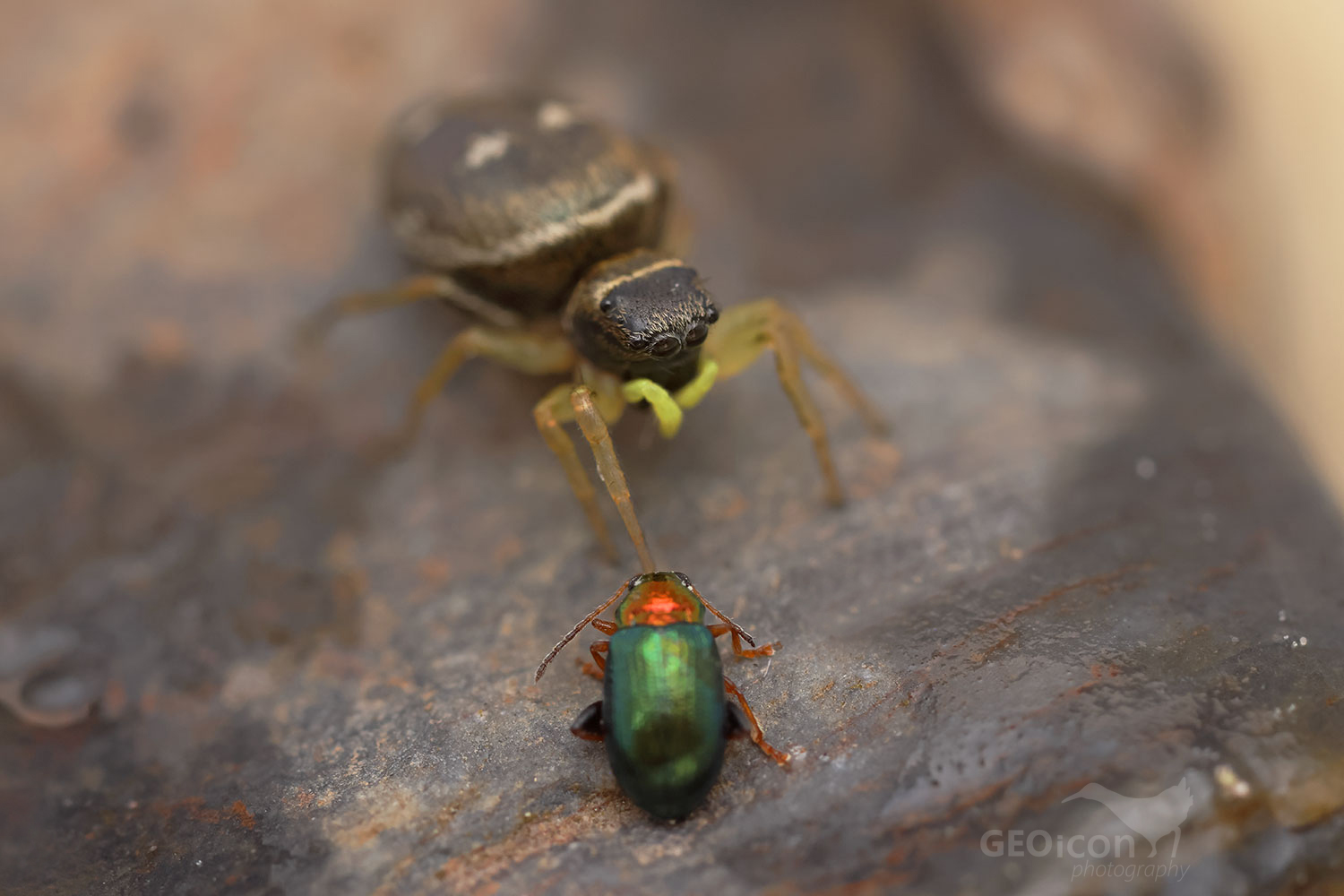
Jumping spider Heliophanus flavipes/cupreus looks eye to eye with a beetle with Flea beetles (Epitrix).
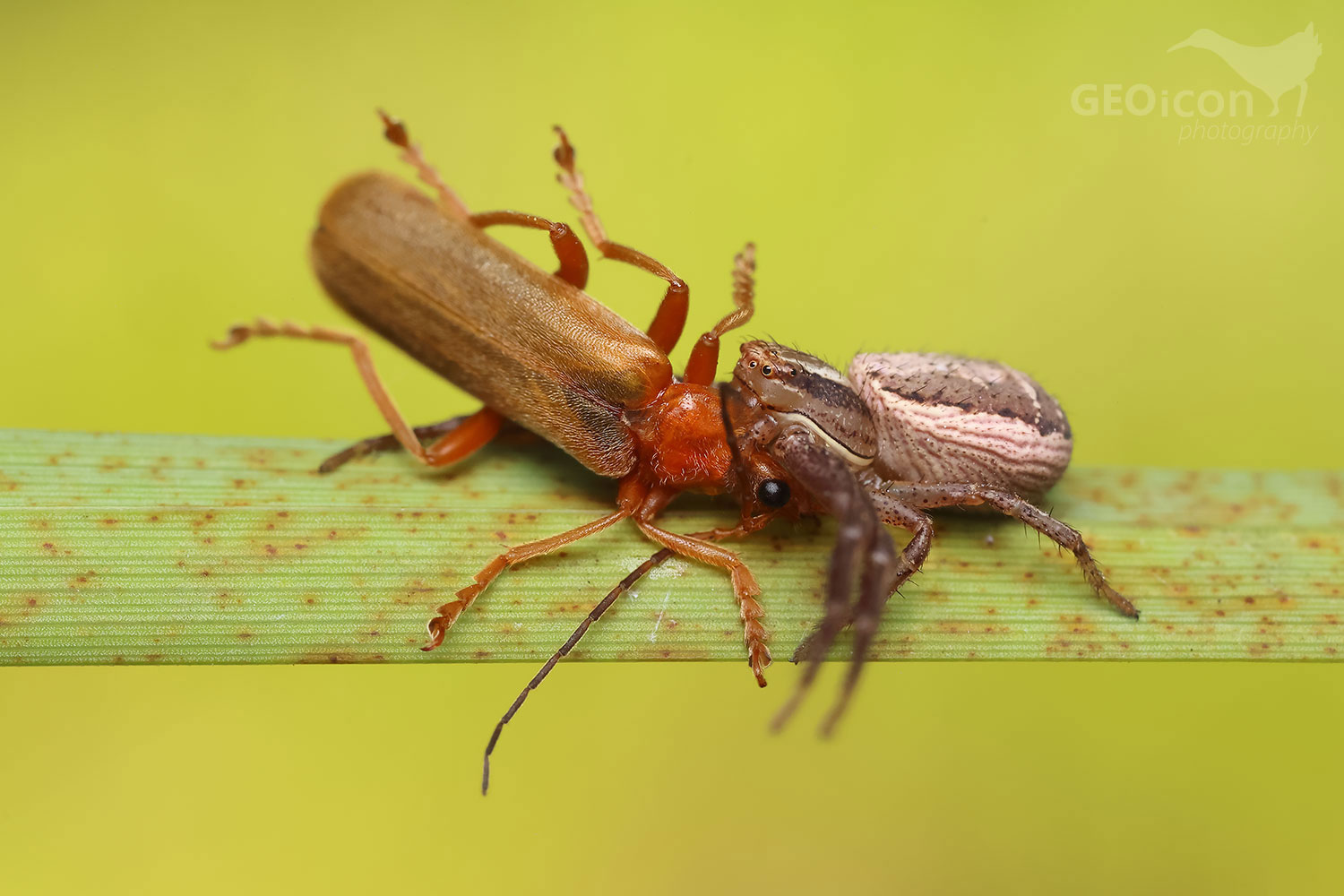
Swamp crab spider (Xysticus ulmi) sucking a caught Cantharis beetle (Cantharis).
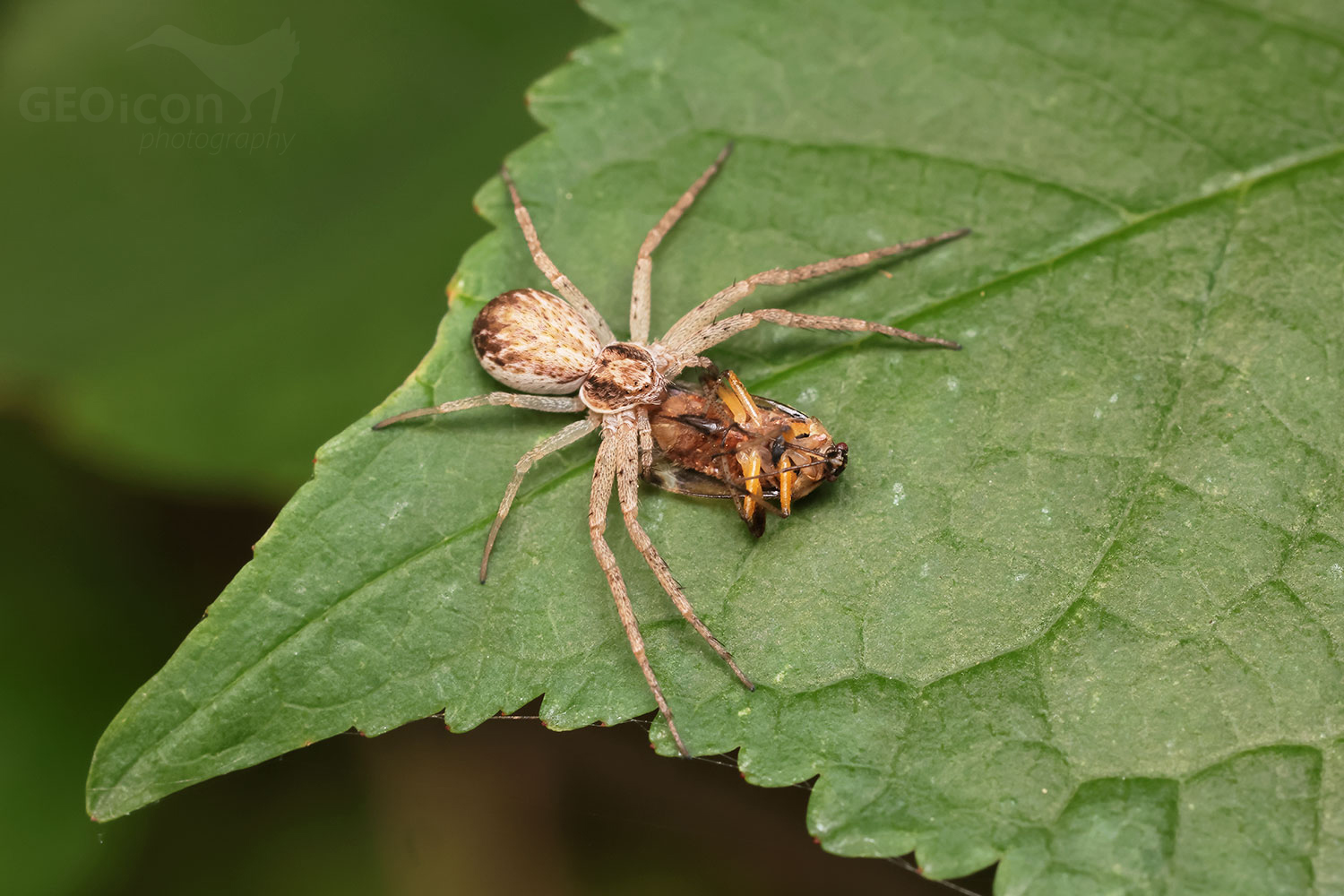
Philodromus dispar female with less common prey, a caught cockroach (Blattodea).
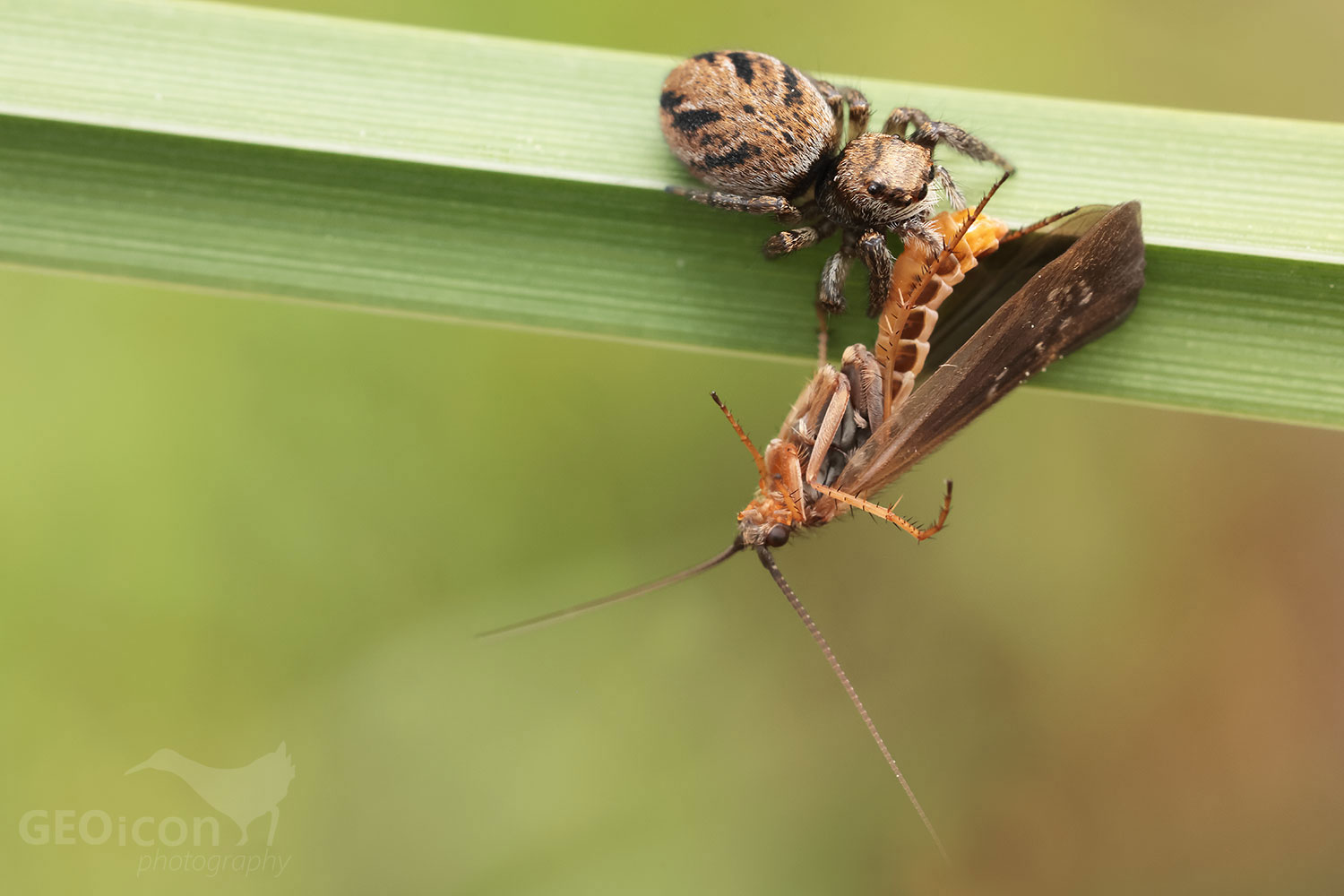
Jump spider Evarcha arcuate female with caught stoneflies (Plecoptera) on the reed.
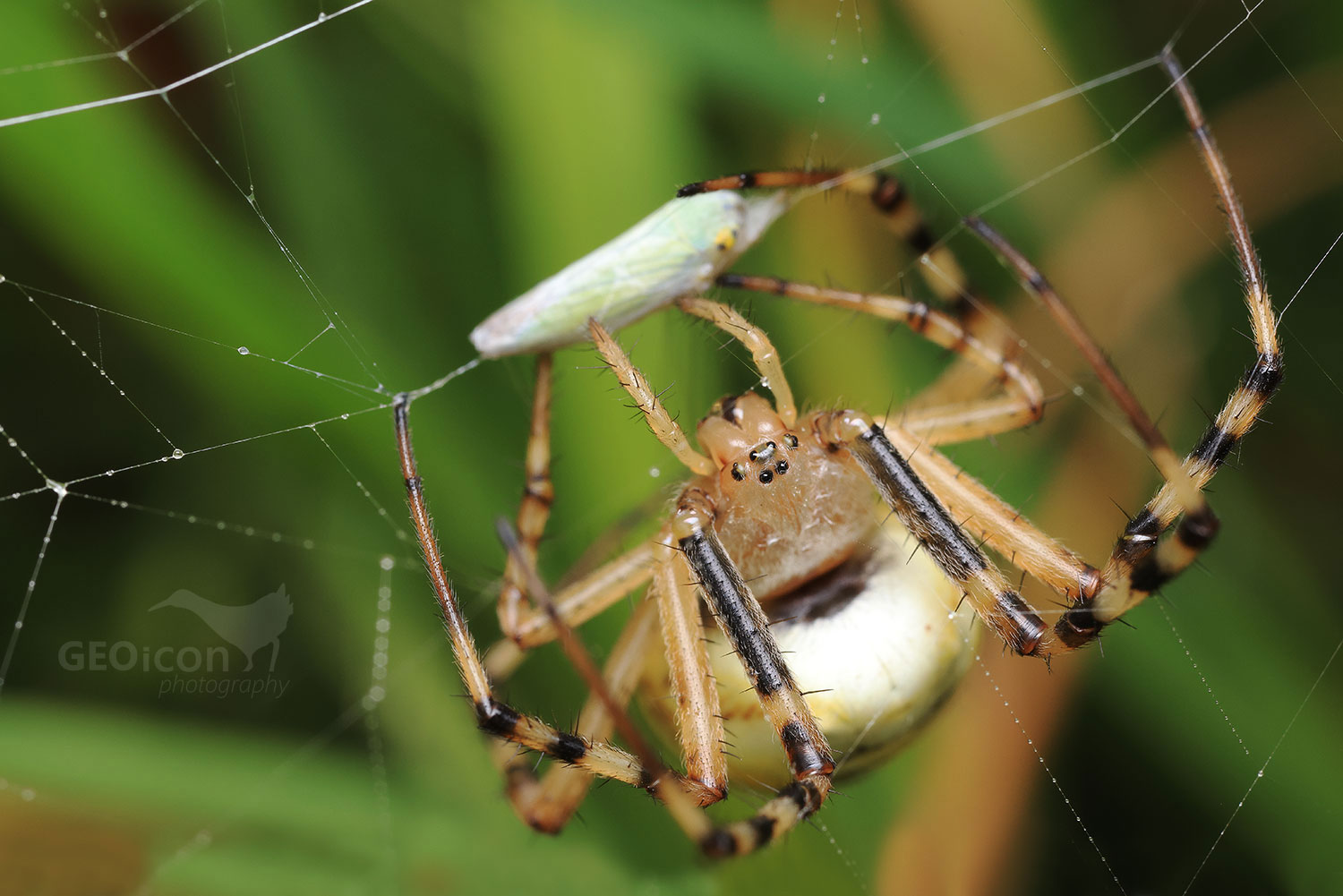
Spider Metellina segmentate with caught Leafhopper (Cicadellidae) wrapped in a cocoon.
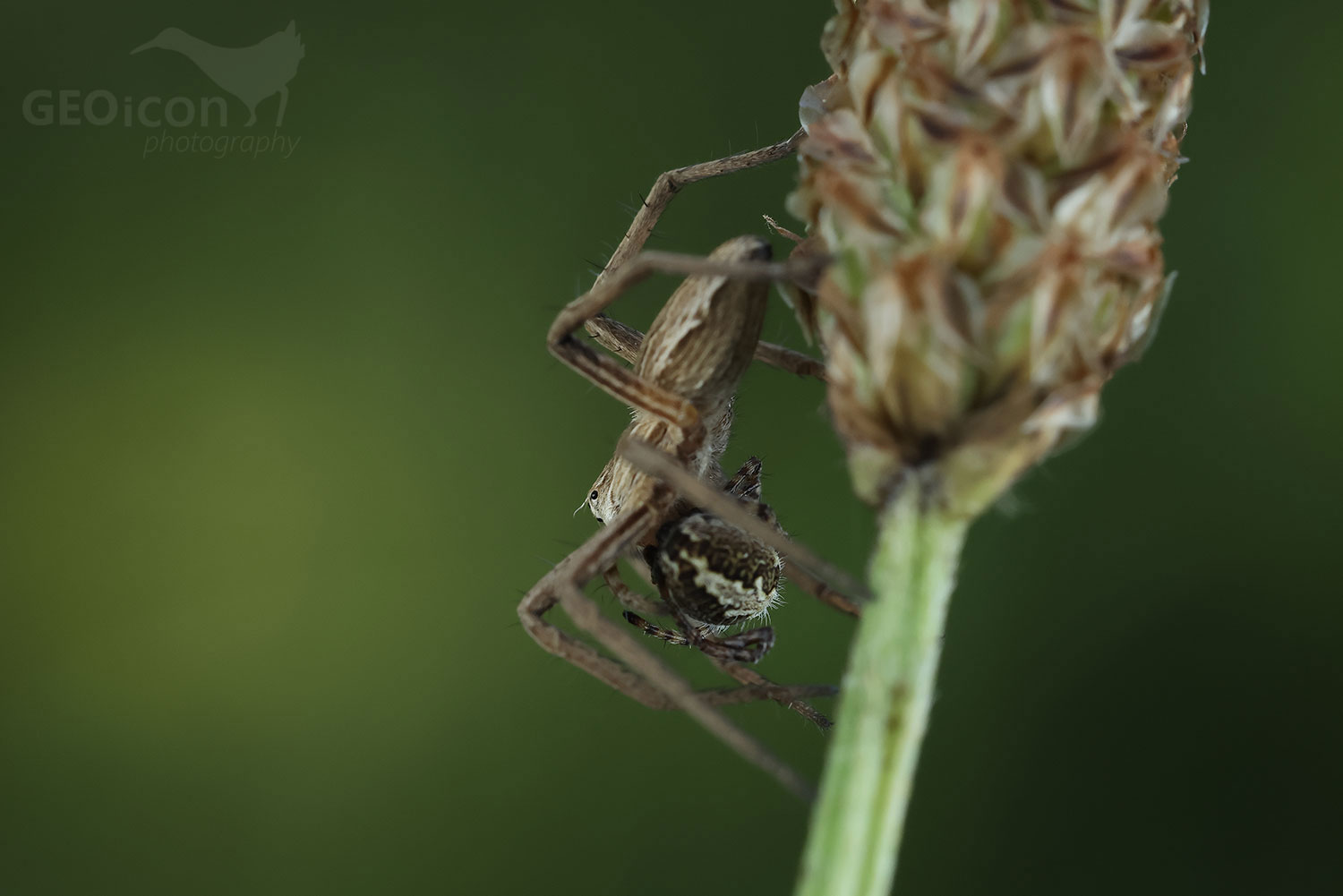
Spider Pisaura mirabilis, as you can see, other spiders are also counted among the spider’s catches, in this case a small Cross spider (Araneus).
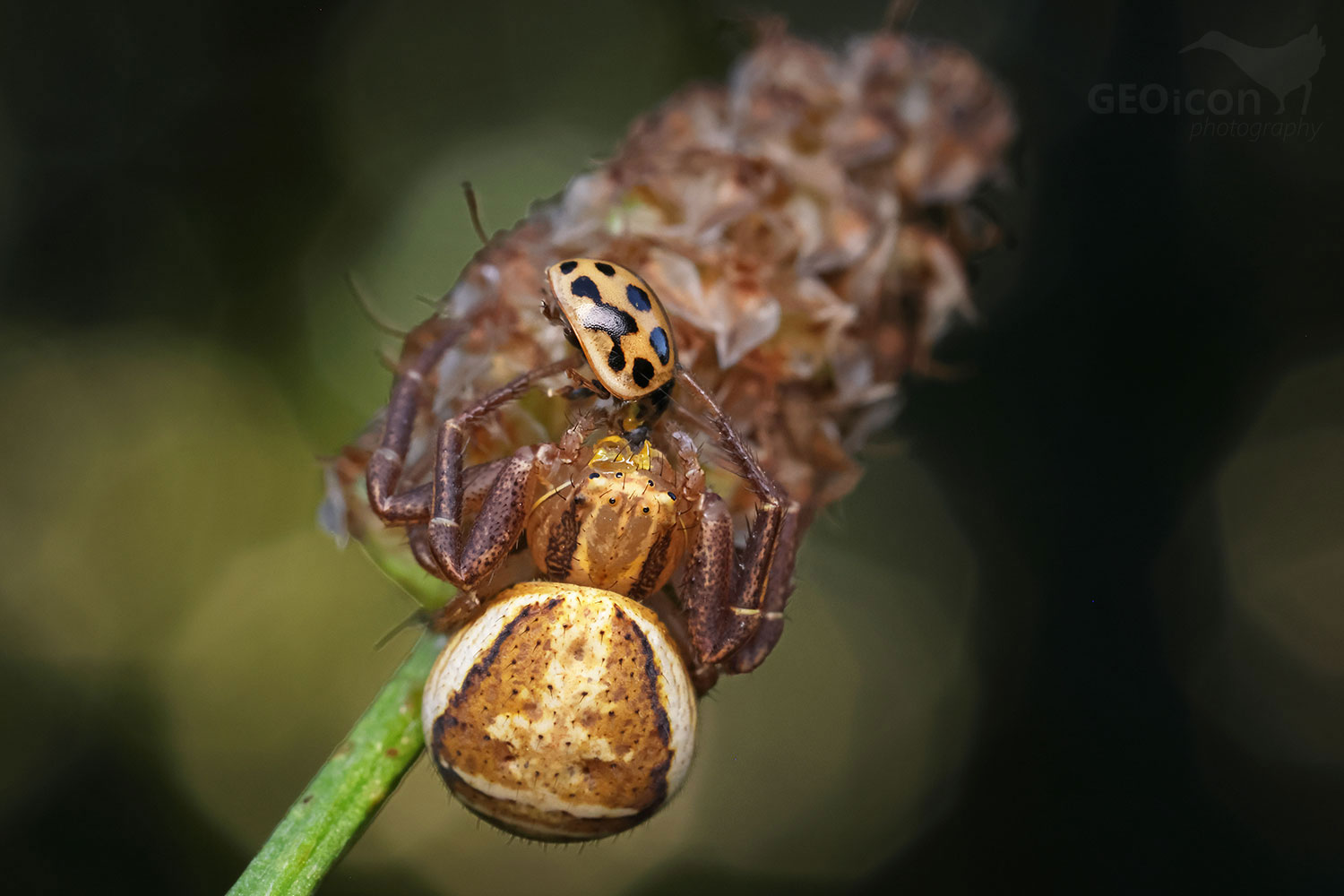
Swamp crab spider (Xysticus ulmi) with caught an invasive species of Ladybird (Psyllobora vigintiduopunctata).
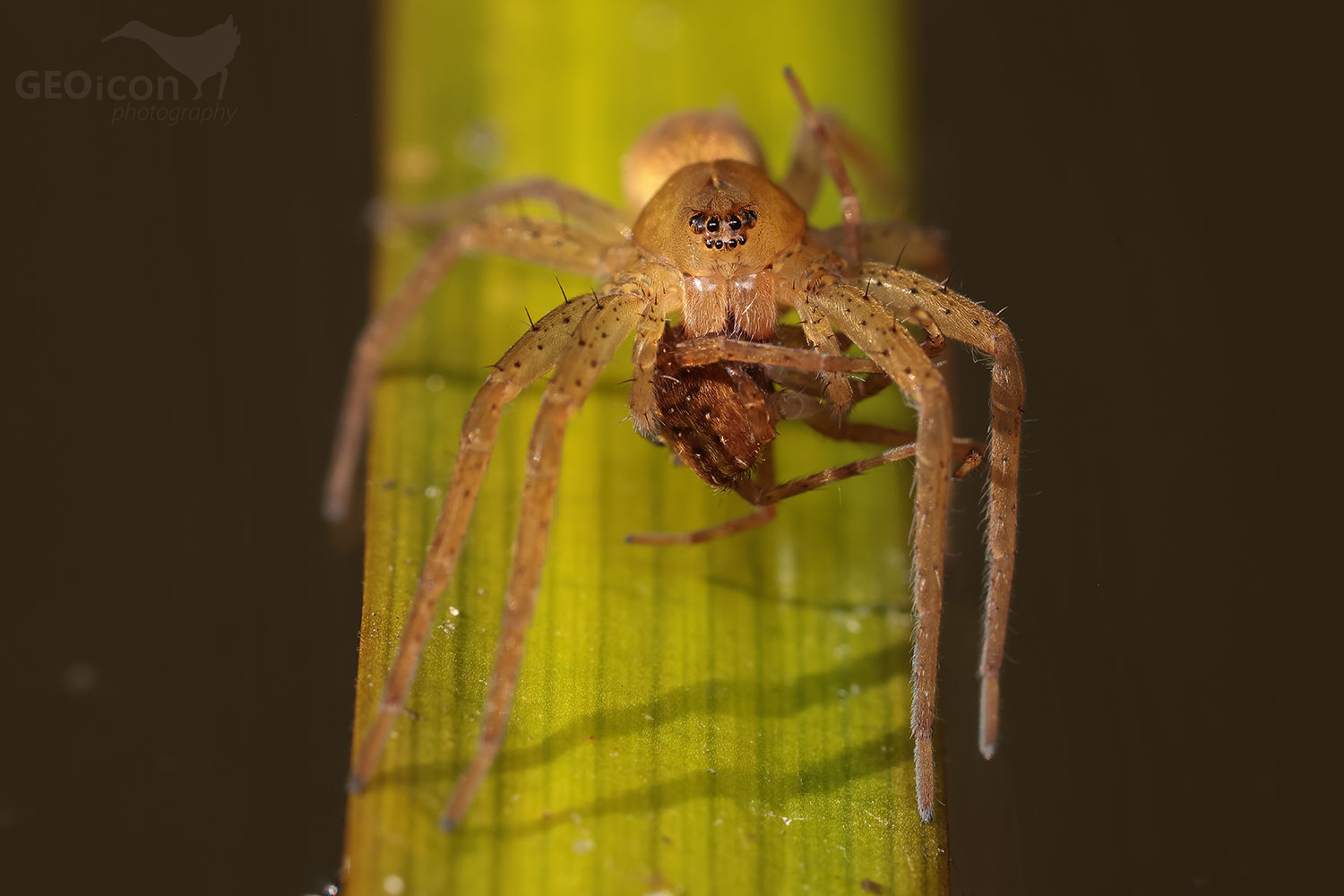
Great raft spider (Dolomedes plantarius) is a cannibal, its catch is a member of its own species.
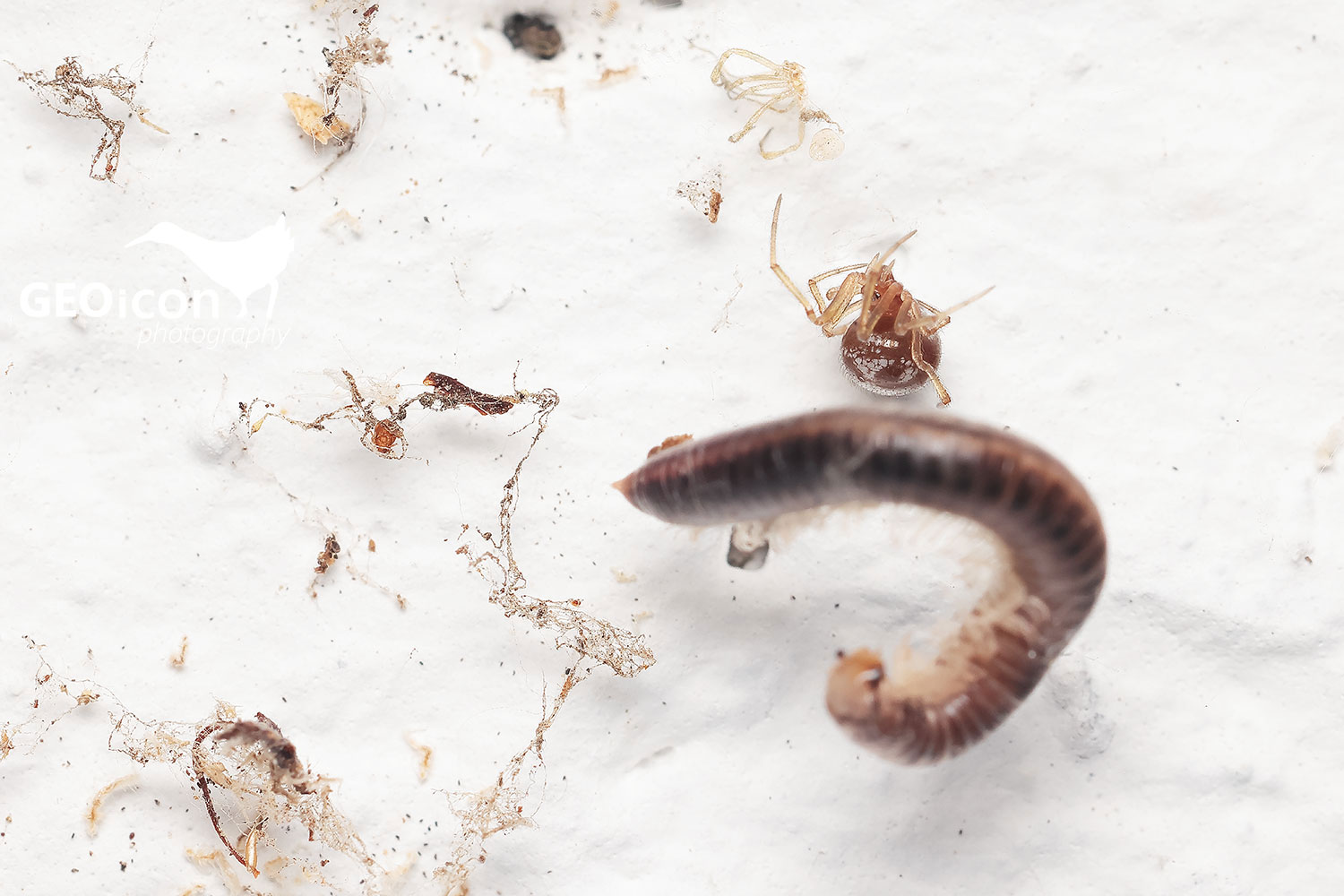
Triangulate cobweb spider (Steatoda triangulosa) with caught Millipede (Millipedes) several times larger.
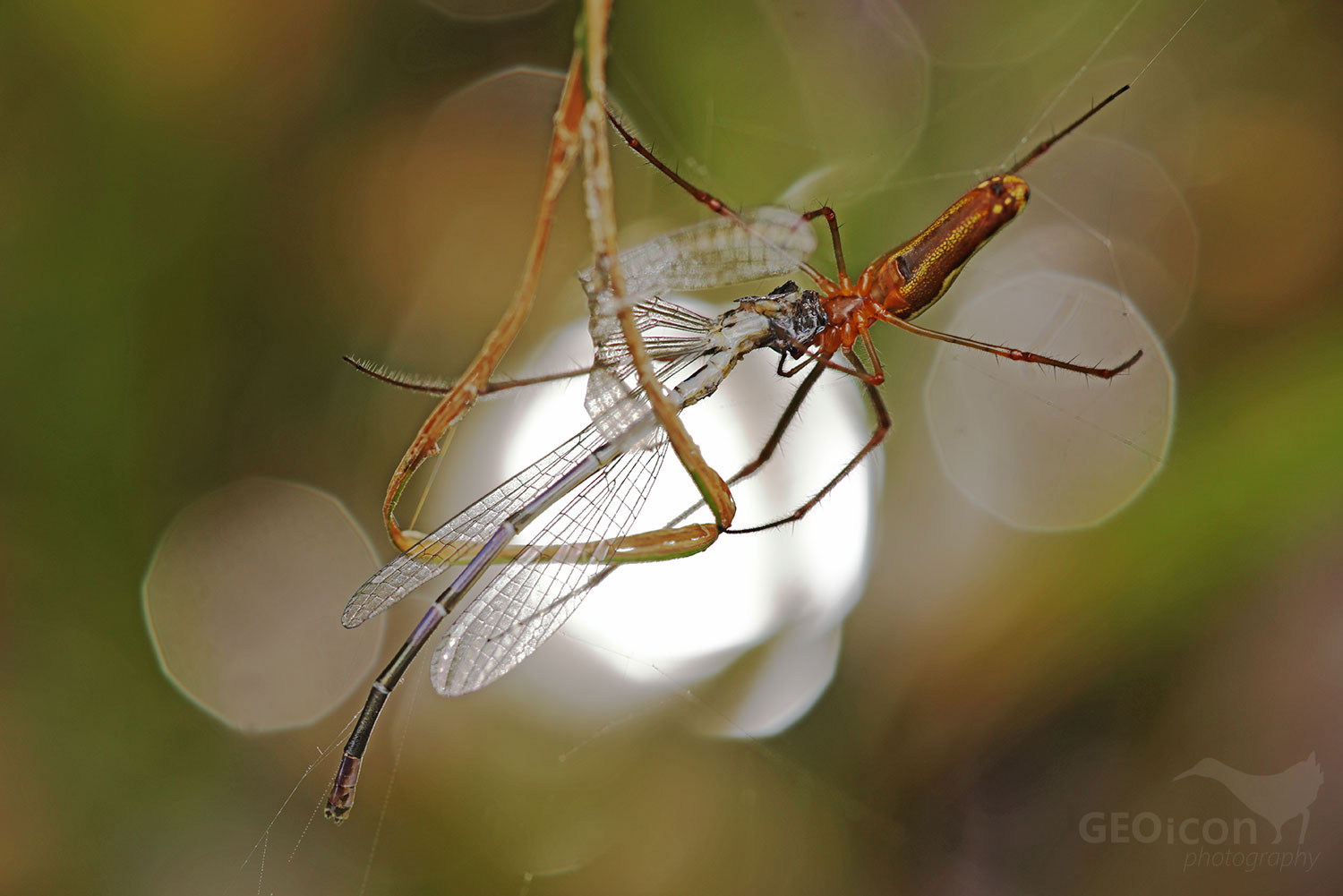
Silver stretch spider (Tetragnatha montana) in the sedge with caught Damselfly (Nehalennia).
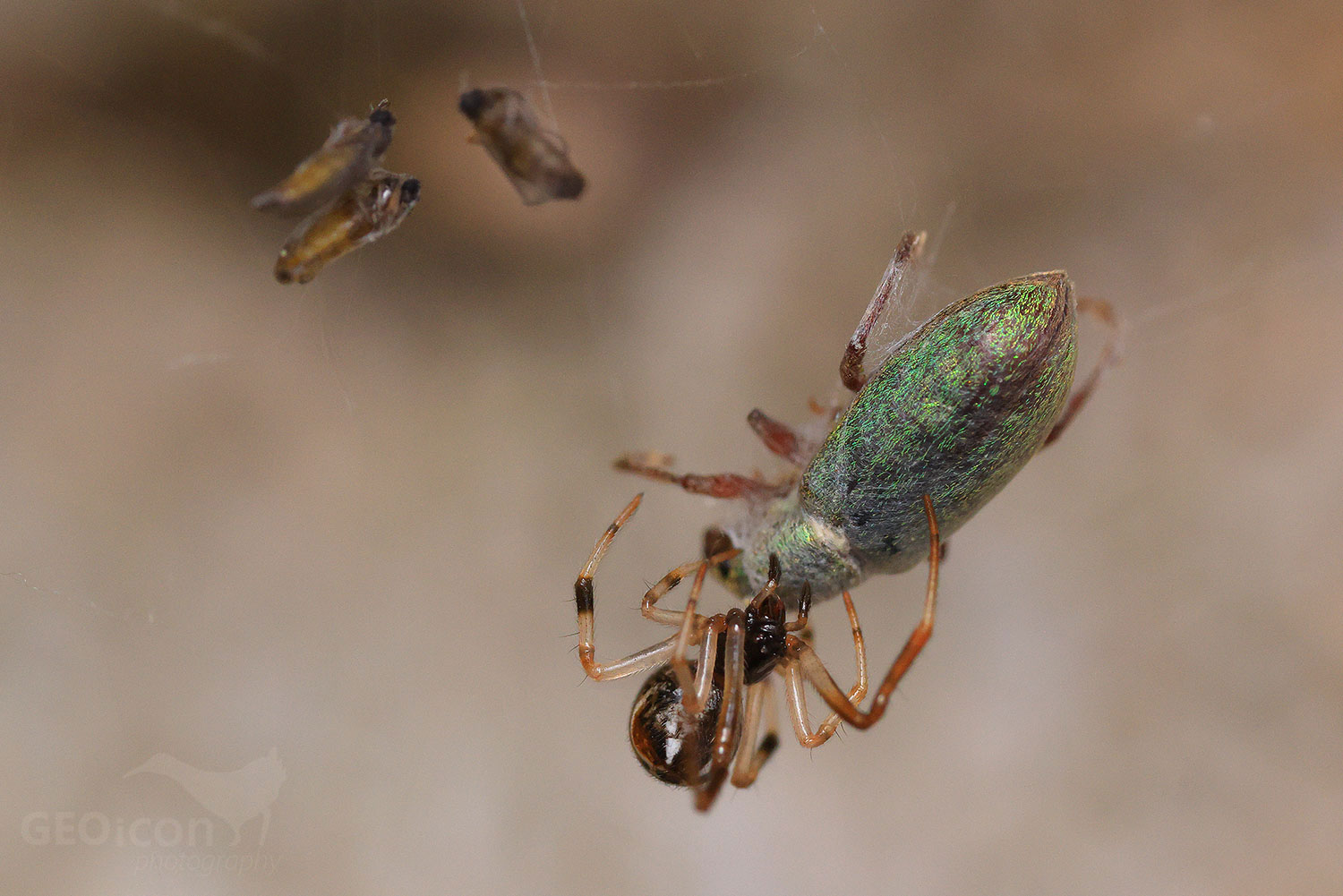
Spider False widows (Steatoda) wraps its newly caught Snout beetles (Curculionidae).
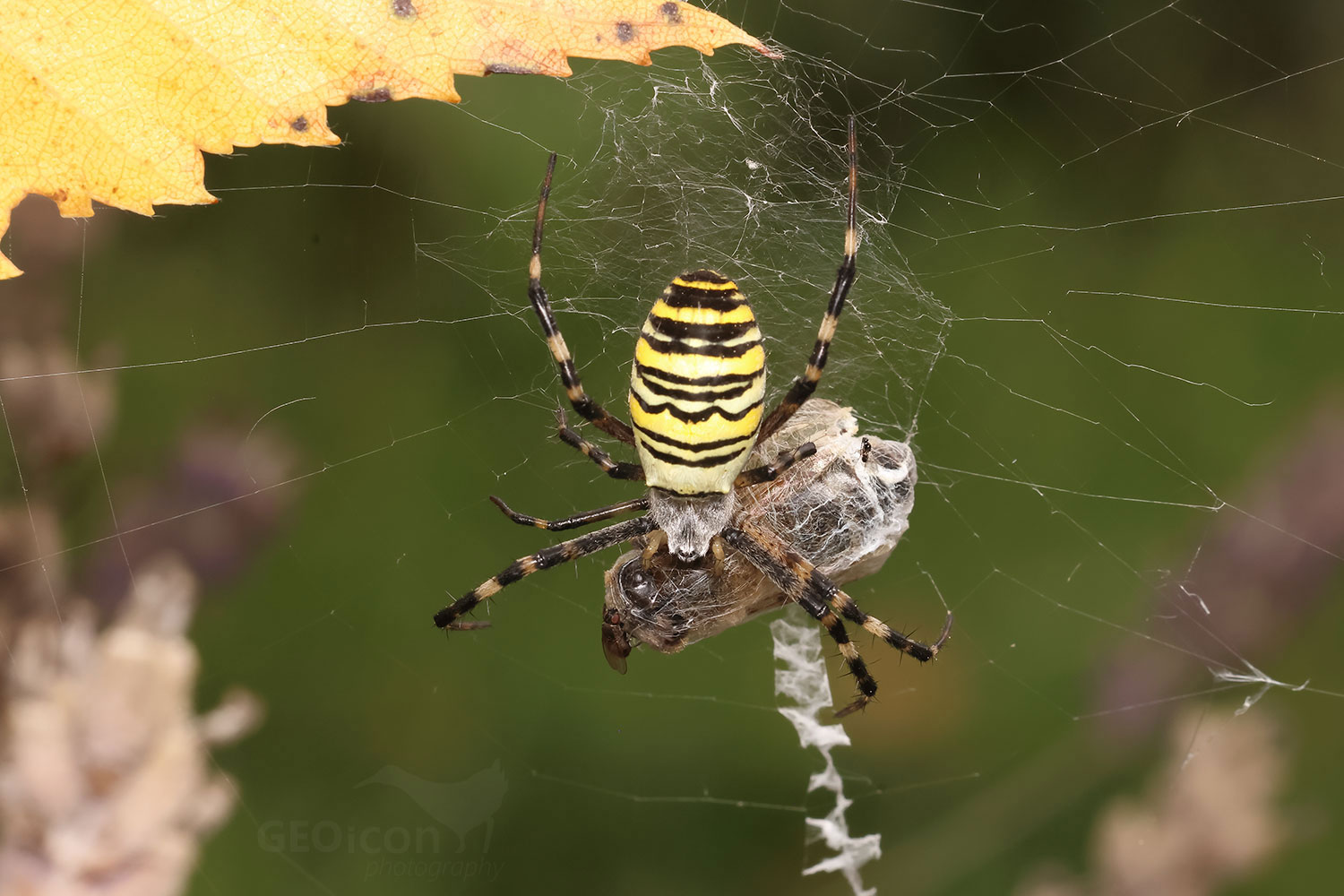
Wasp spider (Argiope bruennichi) is a large invasive species that dares to attack even bees (Apidae). Tiny flies (jackal flies) can be seen on the bee’s cocoon, which lay their eggs in the cocoon and thus parasitize the spider’s prey.
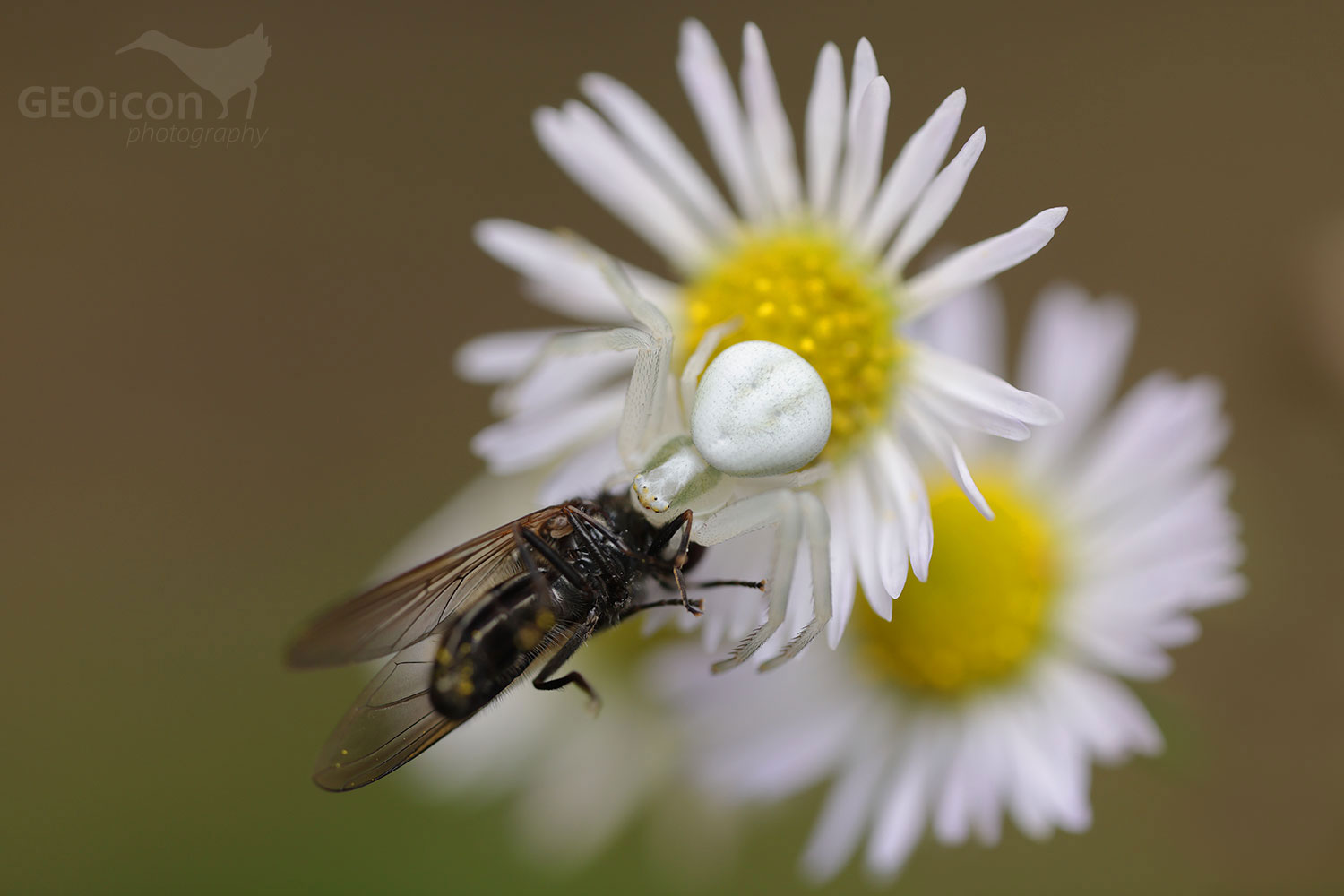
Flower crab spider (Misumena vatia) with its traditional prey, a fly (Diptera).
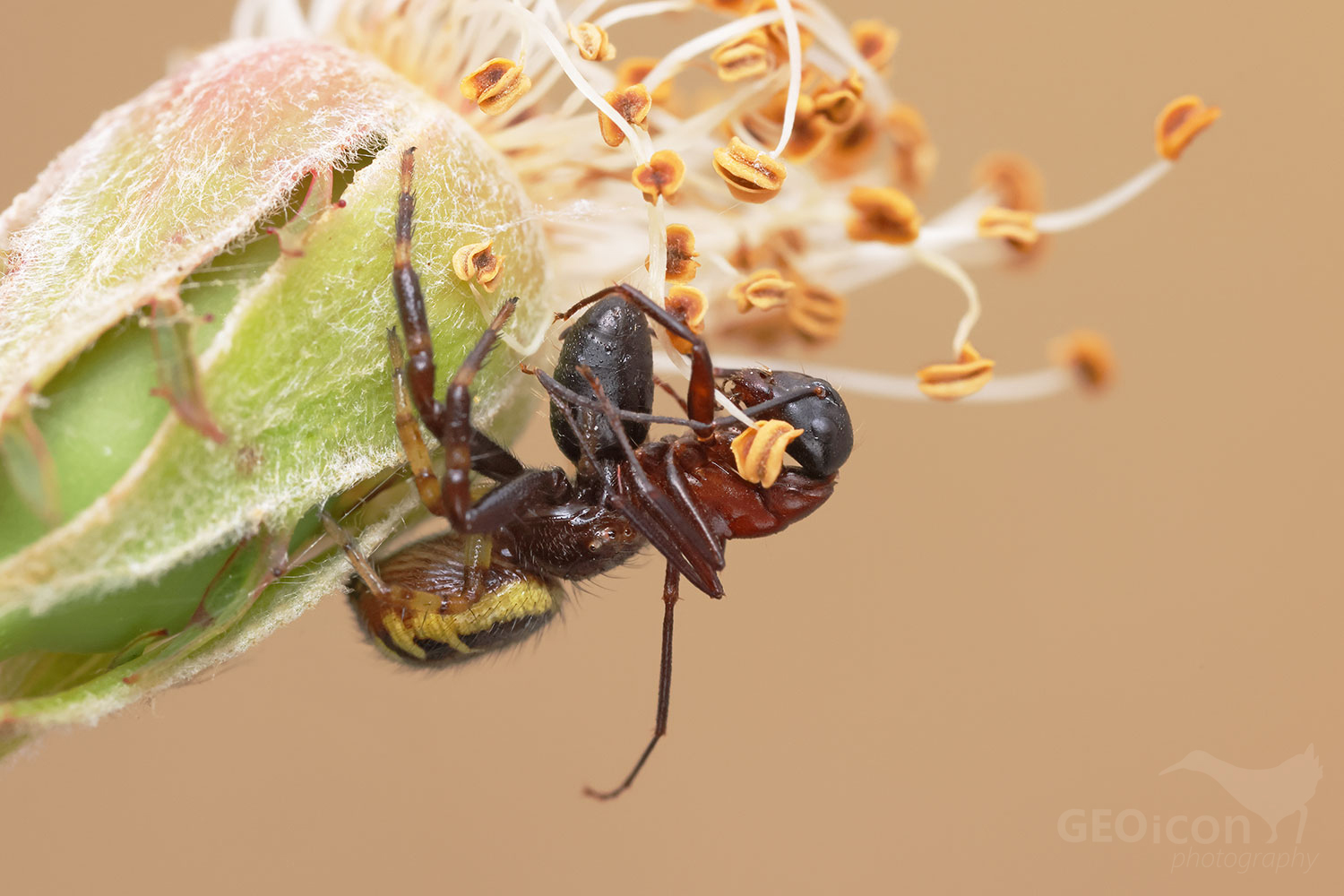
Probably Cricket-bat orbweaver (Mangora acalypha) with less traditional prey, an ant (Formicidae).
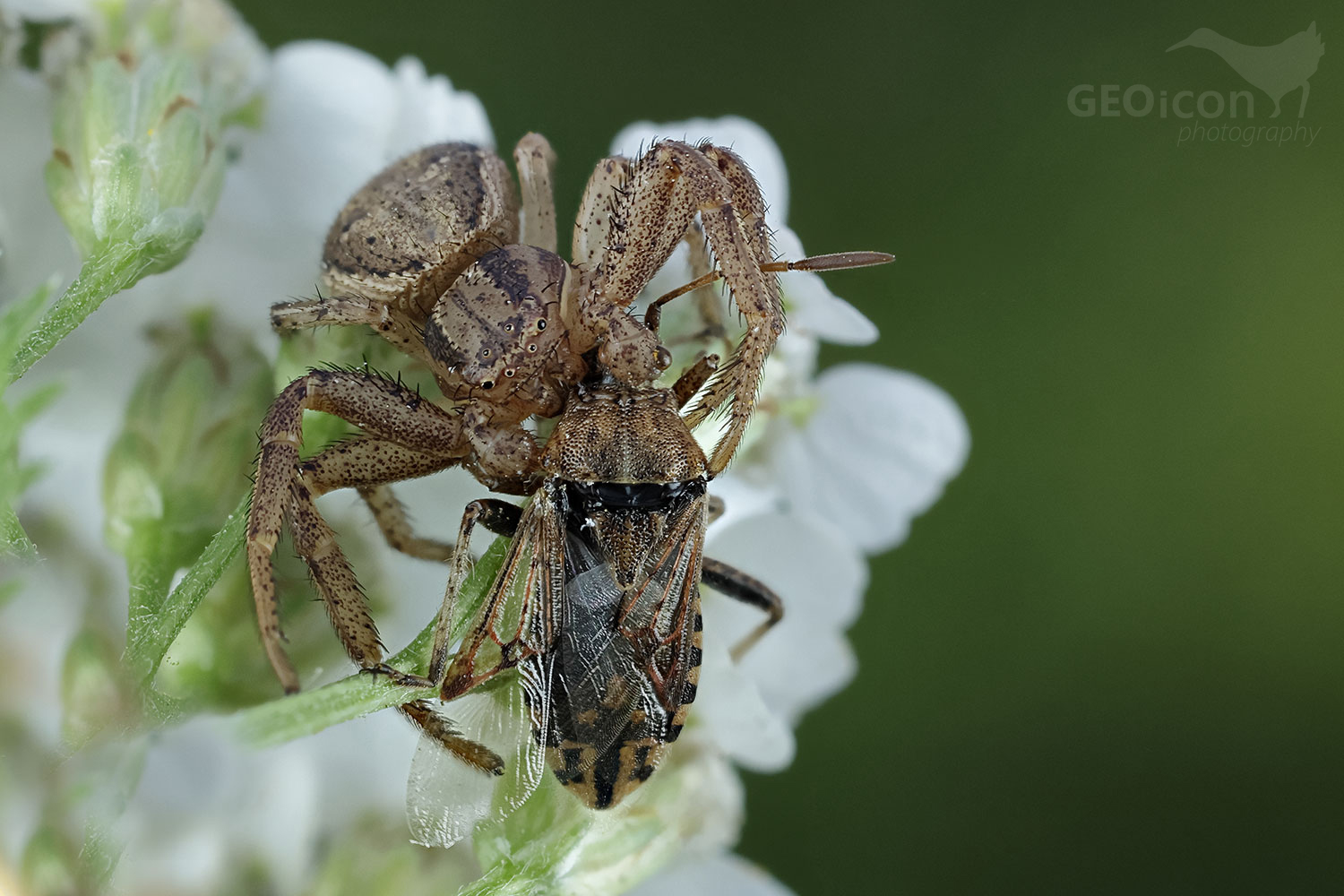
A crab spider (Xysticus) with caught Shield bugs (Pentatomidae), which is also not common on a spider’s menu.